


欢迎来到蒋超实验室!
Welcome to Jiang lab!
环境中的空气、水体、土壤、食物,以及共生于人体内外的微生物群落与其代谢产物,共同构成了复杂而动态的环境暴露体系,持续影响着人类健康与疾病发生。这些暴露往往具有长期性、动态性和高度个体化的特征。在广义暴露组学框架下,物理、化学和生物环境暴露与行为和生活方式暴露被统一纳入研究。现有研究表明,暴露相关因素可解释人类约 50–70% 的疾病风险,其余主要由遗传易感性以及医疗与社会结构因素决定。然而,我们对真实存在的暴露及其时空变化和作用机制仍缺乏系统认知,这正是“同一健康”理念下亟待解决的核心科学问题。本实验室致力于解析环境暴露、微生物与健康之间的内在联系,聚焦从环境到人体、从宏观组学到微观分子、从关联到机制的系统研究。
研究方向包括:
环境暴露组的时空特征与个体差异
个体化暴露监测技术与可穿戴设备
暴露组—人体微生物组—健康机制
微生物进化与种群遗传学
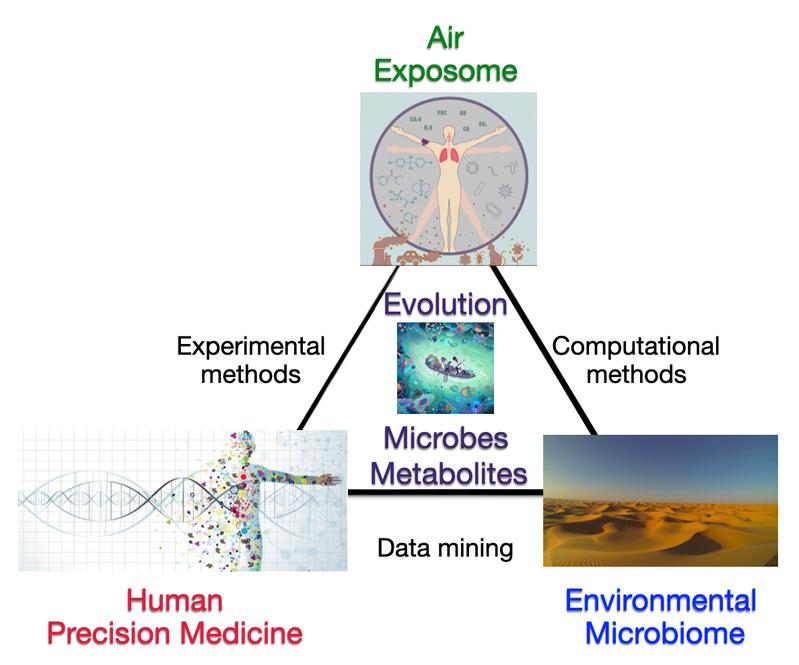
暴露组与微生物组实验与计算方法
泛环境微生物组功能挖掘
多组学与机器学习在精准医学与环境健康中的应用
欢迎对环境暴露组、微生物组及相关交叉方向感兴趣的同仁交流合作。
Air, water, soil, food, and the microbial communities and metabolites that coexist within and on the human body together constitute a complex and dynamic exposome that continuously shapes human health and disease. These exposures are often long-term, dynamic, and highly individualized. Within the framework of the broad exposome, physical, chemical, and biological environmental exposures are considered together with behavioral and lifestyle exposures. Current evidence suggests that exposure-related factors account for approximately 50–70% of human disease risk, with the remainder largely determined by genetic susceptibility as well as healthcare and social–structural factors. However, our systematic understanding of what exposures truly exist, how they vary across time and space, and how they mechanistically influence human and ecosystem health remains limited. Addressing these challenges lies at the core of the One Health paradigm.
Our laboratory is dedicated to elucidating the intrinsic links between environmental exposures, microbiomes, and health, with a focus on systematic investigations spanning environments to individuals, communities to molecules, and associations to mechanisms.
Research areas include:
Spatiotemporal characteristics and inter-individual variability of the exposome
Personalized exposure monitoring technologies and wearable devices
Mechanistic links along the exposome–human microbiome–health axis
Microbial evolution and population genetics
Experimental and computational methods for exposome and microbiome research
Functional mining of pan-environmental microbiomes
Applications of multi-omics and machine learning in precision medicine and environmental health
We welcome collaboration and discussion with researchers interested in the exposome, microbiome, and related interdisciplinary fields.
Lab address: School of Biological Science (生命科学学院) building #338 (not the LSI nano building).
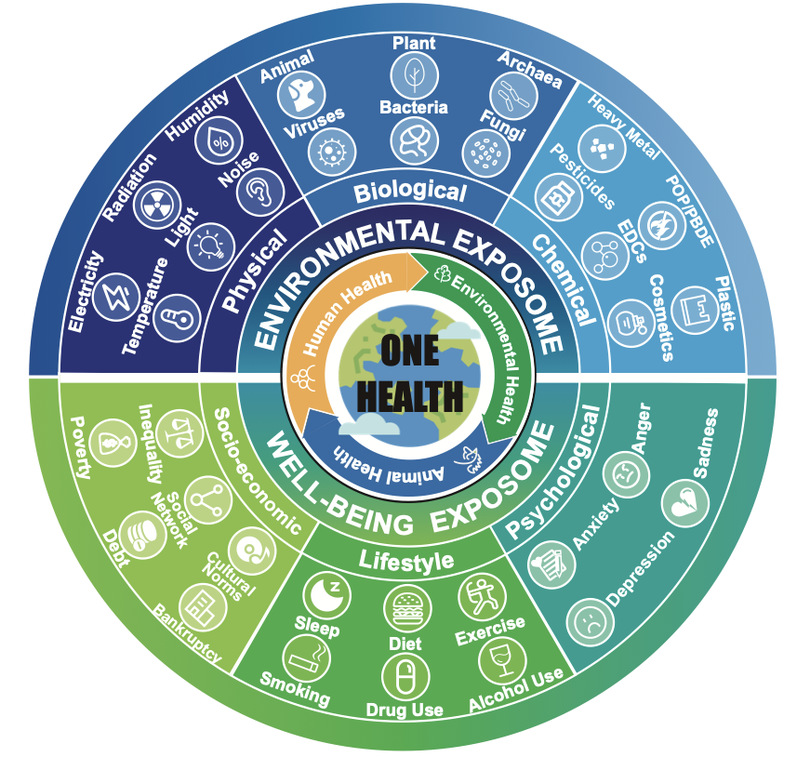
Copyrighted figures by Jiang Lab. Ask for permission before reproducing!!!