

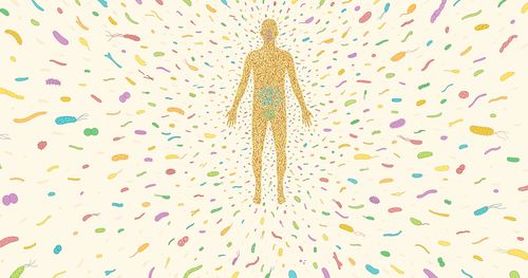

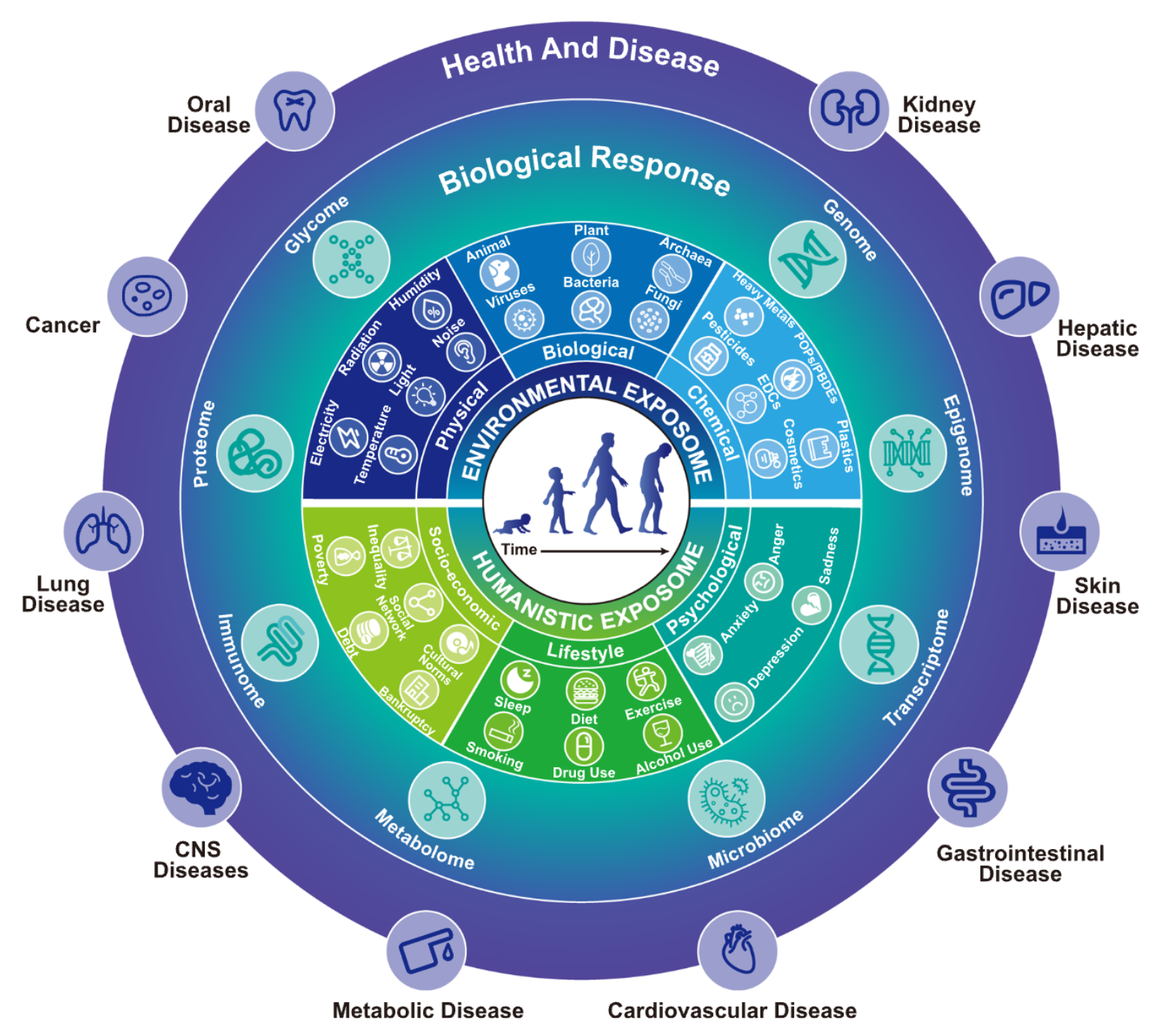
我们生活的世界始终处在不断变化的环境之中。从空气、水体和土壤,到食物中的微生物、化学物质与微纳塑料,再到共生于人体内外的庞大微生物群落及其代谢产物,形形色色的环境暴露因素无时无刻不在影响着人类的健康与疾病发生(对其他生物亦然)。这些影响往往是长期、动态且高度个体化的。在广义暴露组学框架下,将物理、化学、生物环境暴露与行为和生活方式暴露合并考虑,现有研究表明,暴露相关因素可解释人类约 50–70% 的疾病风险,其余部分主要由遗传易感性以及医疗与社会结构因素决定。
遗憾的是,受限于研究方法和技术手段,我们对复杂环境暴露的系统认知仍然非常有限:哪些生物和化学因素真实存在?它们如何随时间和空间变化?又是通过怎样的机制作用于人体及生态系统?进一步的,类似的问题,在人类健康、环境微生物以及动植物研究中仍缺乏清晰答案。然而,这些问题正是“同一健康”理念中的核心科学命题。
本实验室正是围绕这些挑战展开研究,致力于从环境到人体、从组学到分子、从关联到机制,系统解析环境暴露、微生物与健康之间的内在联系。
目前,实验室的主要研究方向包括:
环境暴露组在宏观和个体尺度上的刻画,重点关注生物、化学和物理组分的多样性及其时空动态变化;
个体化环境暴露组监测技术与可穿戴设备的开发与应用;
环境暴露组—人体微生物组—健康之间的交互关系及其生物学机制;
微生物在不同尺度上的功能进化动态与种群遗传学研究;
面向环境暴露组与微生物组的分子实验方法和计算分析方法的开发与应用;
泛环境微生物组的深度功能数据挖掘;
多组学与机器学习在精准医学和环境健康研究中的应用。
实验室鼓励交叉与探索,融合实验与计算、生物与环境、基础与临床研究。如果你对环境暴露组、微生物组或相关交叉方向感兴趣,欢迎随时与我交流,共同探讨有挑战也有意义的科学问题。
The world we live in is continuously shaped by a dynamic and ever-changing environment. From microbes, chemicals, and micro- and nanoplastics present in air, water, soil, and food, to the vast communities of microorganisms and their metabolites that coexist within and on the human body, diverse environmental exposures constantly influence human health and disease (as well as the health of other organisms). These influences are often long-term, dynamic, and highly individualized. Within the framework of the broad exposome, which integrates physical, chemical, and biological environmental exposures together with behavioral and lifestyle exposures, existing evidence suggests that exposure-related factors account for approximately 50–70% of human disease risk. The remaining proportion is largely determined by genetic susceptibility, healthcare systems, and social and structural determinants.
Despite their importance, our systematic understanding of complex environmental exposures remains limited, largely due to methodological and technological constraints. Fundamental questions remain unresolved: which biological and chemical exposures are truly present, how do they vary across time and space, and through what mechanisms do they impact human biology and ecosystems? Similar gaps persist across studies of human health, environmental microbiomes, and plant and animal systems. Yet these questions lie at the heart of the One Health paradigm.
Our laboratory is dedicated to addressing these challenges by systematically elucidating the intrinsic links between environmental exposures, microbiomes, and health—from environments to individuals, from communities to molecules, and from associations to mechanisms.
The major research directions of the laboratory include:
Characterization of the exposome at both macro-environmental and individual scales, with a focus on the diversity and spatiotemporal dynamics of biological, chemical, and physical components;
Development and application of personalized exposome monitoring technologies and wearable devices;
Investigation of the exposome–human microbiome–health axis and its underlying biological mechanisms;
Studies of microbial evolutionary dynamics and population genetics across multiple spatial and temporal scales;
Development and application of molecular experimental and computational methods for exposome and microbiome research;
Deep functional mining of pan-environmental microbiomes;
Integration of multi-omics and machine learning approaches in precision medicine and environmental health research.
The laboratory actively encourages interdisciplinary exploration, integrating experimental and computational approaches, biology and environmental sciences, as well as basic and clinical research. If you are interested in research at the intersection of the exposome, microbiome, and related interdisciplinary fields, you are very welcome to reach out and discuss scientifically challenging and meaningful questions.
Link to video:https://www.seeker.com/videos/health/how-your-invisible-exposome-cloud-could-be-messing-with-your-health
Link to reference:https://www.sciencedirect.com/science/article/pii/S0092867418311218
https://doi.org/10.1002/imt2.50
我们长期欢迎对以上方向感兴趣的博士加入实验室共同探索
We welcome students and postdocs who share the same interests to explore with us!
Email:jiang_chao@zju.edu.cn